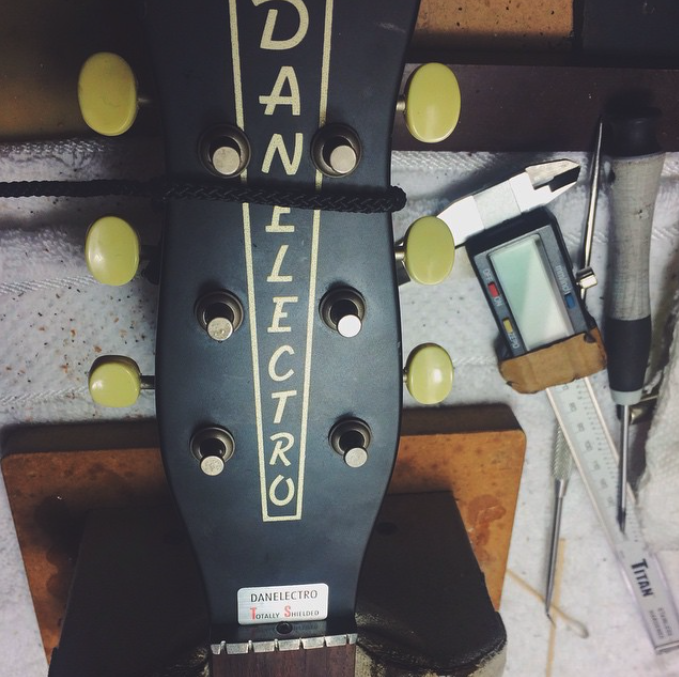
I stare at broken things all day. Wood. Wire. Metal. Dreams. Sometimes a tuner bushing that’s been loose since 2009, held together only by hope and stage volume.
Here’s what I’ve learned: guitars almost never explode without warning. They whisper first.
Not “I’m broken.” More like:
- “Hey… can you stop ignoring me?”
- “I’m not mad. I’m just… slightly out of alignment with reality.”
- “Something moved. Again. Because we live on a humid planet.”
So this is the calm checklist. The “before it starts shouting” guide. Here are seven subtle signs that your guitar might be drifting off the right path. You can safely check these signs.
You don’t need to turn into a YouTube surgeon with a Phillips head screwdriver and a messiah complex.
If you’re thinking any of these, welcome to the club:
- “Am I doing something wrong?”
- “Is this normal?”
- “Do I need a full repair… or just a setup?”
Good news: most of this is routine maintenance drift, not catastrophe.
Also true: some signs are urgent. I’ll label those so you don’t accidentally “DIY” your way into folklore.
The big idea (said gently, with love)
Most “mystery problems” are just your guitar’s playability system drifting:
- Neck relief changes → buzz, stiffness, weird feel
- Nut/bridge contact points bind or wear → tuning drift, sitar-ish nonsense
- Frets wear / one high fret → dead notes, choking bends
- Humidity & temperature shifts → action creep, cracks, fret sprout, existential dread
Plain English definitions (so you can sleep tonight):
- Relief: the neck’s slight forward curve that gives strings room to vibrate
- Action: string height (feel + buzz margin)
- Intonation: whether fretted notes match pitch up the neck
- Setup drift: nothing “broke,” but everything moved a tiny bit—like a house settling
Three myths I see every week:
- “New strings fix tuning.” Sometimes. Often it’s nut friction.
- “Buzz means the neck is warped.” Usually it’s relief/action or one high fret.
- “Finish checking = structural crack.” Not always. But you should learn the difference, because the difference matters.
The 7 silent signs (the whisper list)
1) A subtle buzz or rattle that comes and goes
(especially in certain rooms, like your guitar is haunted)
What it feels like: you can’t reproduce it on command. You play in one room and it’s fine. You move ten feet and suddenly there’s a tiny demon in the bridge.
Common causes:
- Neck relief shifting slightly
- A loose part (tuner bushing, strap button, jack plate, pickguard screw)
- A sympathetic rattle (springs, saddle screws, truss rod cover)
Safe at-home check (no heroics):
- Capo the 1st fret, then lightly tap around hardware.
- Play the offending note and gently touch likely culprits to see if it stops.
Book a pro if:
- It’s getting worse
- Buzz is everywhere
- The guitar just changed string gauge and now feels like it hates you
2) One note sounds dead… or bends choke out in one area
(the “why does this one spot hate me” phenomenon)
What it feels like: one note “thunks,” dies early, or bends fret out past a certain fret. Usually when you’re trying to be emotional.
Common causes:
- One high fret
- A worn fret under your most-used positions
- Relief/action balance drifting
Safe at-home check:
- Play the same pitch somewhere else (adjacent string, different position).
- If it only dies in one spot, that’s a strong “single-fret” clue.
Book a pro if:
- It’s killing bends above the 12th
- You want low action but keep hitting a buzz wall
(The answer is often “fret level,” not “lower it until it’s unplayable.”)
3) Your action has slowly crept higher
(your guitar got older and started making you work for it)
What it feels like: chords are stiffer. Your hand tires quicker. The guitar didn’t ask permission; it just changed.
Common causes:
- Seasonal humidity movement (especially acoustics)
- Neck relief increasing
- Saddle/bridge geometry shifting
Safe at-home check:
- Measure action at the 12th fret with a simple ruler. Write it down.
- Note the season and indoor conditions (AC/heated air = sneaky dryness).
Book a pro if:
- Action jumped suddenly
- You see top distortion, sinking, or bridge lift on an acoustic
- Intonation and feel both went sideways at the same time
4) It won’t stay in tune even with fresh strings
(especially G/B—those two are always gossiping)
What it feels like: you tune. You play. You tune again. You begin bargaining with the universe.
Common causes:
- Nut slots binding (friction)
- String not seated/stretched properly
- Worn saddle contact points / sharp edges
- Trem friction (if applicable)
Safe at-home check:
- Tune up, do a few bends, re-check.
- Listen for a “ping” at the nut while tuning (classic friction sign).
Book a pro if:
- You’re constantly re-tuning after strings are broken in
- You hear pings, feel jumps, or the string returns sharp/flat unpredictably
(Nut optimization beats suffering.)
5) Season changes make it feel like a different instrument
(winter guitar vs summer guitar: two separate personalities)
What it feels like: winter = buzzy and sharp-edged. summer = high action and swampy. Your guitar is not moody. It is wood.
Common causes:
- Humidity changes moving the neck/top
- Fret sprout (sharp fret ends in dry air)
- Relief drift over time
Safe at-home check:
- Note the month and indoor air (dry heat is brutal).
- Run your hand along the fretboard edges—do frets feel sharp?
Book a pro if:
- You’re chasing relief/action every few weeks
- Sharp fret ends are cutting you
- An acoustic shows visible top/back changes
6) You notice hairline cracks, lifting edges, or “something looks… off”
(the part where I stop being funny for a second)
Finish checking can be harmless (especially on older finishes).
But wood cracks, separation, bridge lift, and neck joint gaps are different animals.
Safe at-home check:
- Use light from an angle. Look closely.
- Ask: does it look like finish lines, or does it follow grain like a wood split?
Stop and book an inspection if:
- The crack opens/closes with gentle pressure
- You see bridge lifting, top distortion, loose binding
- The neck joint looks like it’s separating
(Structural issues are “fix early” problems.)
7) Fret wear shows up
(divots, scratchy bends, intonation fighting you like a stubborn mule)
What it feels like: bends feel gritty. Notes don’t ring clean. You can’t intonate your way out of it.
Common causes:
- Divots in the frets under common chords
- Flat spots causing poor contact
- A fret level is overdue
Safe at-home check:
- Look under your most-used chord zones.
- Feel for rough bends and listen for “warbly” notes.
Book a pro if:
- Intonation keeps fighting you
- You’ve raised action to stop buzz and now it plays like a fence
- Your “dream low action” seems impossible
(Often the missing piece is fret leveling, not more guessing.)
What’s safe to do at home (and what isn’t)
DIY-safe checks (no heroics, no blood oaths)
- Snug obvious loose hardware (snug, not gorilla-tight)
- Measure action and write it down
- Basic tuning stability test + listen for nut “ping”
- Visual inspection under good light
Where DIY backfires (said with love)
- Forcing truss rods
- “Fixing” cracks with random glue
- Filing nut slots without the right gauges
- Sanding frets/board without a leveling plan
If you’re unsure, the best DIY move is often: stop early and document what you’re seeing. That’s wisdom, not weakness.
How to choose the right fix (the non-dramatic checklist)
- Does it happen everywhere or only in one zone of the neck?
- Is it worse after weather changes or string changes?
- Does it affect sound, feel, tuning, or all three?
Red flags (stop DIY, book inspection)
- Crack that appears to move/open, top/back distortion, bridge lifting
- Truss rod that feels maxed out, spins freely, or requires force
- Sudden major action change + new buzz everywhere
- Neck joint separation symptoms
Questions to ask any shop (so you get real clarity)
- “What measurements do you record before/after?”
- “Will you check nut friction + intonation + fret height—or just ‘lower action’?”
- “If you find something structural, how do you document it?”
A good shop should be able to explain the why, not just the what.
Why Amity might be a fit (if you like calm + honest)
This is for players who want:
- Peace of mind, not upsells
- Reliability for gigs and sessions
- A measured, written baseline instead of vibes
Our process (a little ritual, in the right order)
- Tune + symptom check
- Record key measurements (relief/action/string gauge)
- Check nut friction + hardware + electronics
- Adjust in the right order (relief → action → intonation)
- Play-test, re-check, polish, final feel
If you want it, we can leave you with a small “as-of” note you can keep in the case—so six months from now you’re not wondering if you imagined the whole thing.
Cost/benefit (the honest voice)
What drives cost up or down:
- Instrument complexity
- Fret wear level
- Structural issues
- Prior “mystery work”
- Urgency
If you want reference pricing, use our current price list page (rates can change; accuracy beats bravado).
A tiny case study (because this happens constantly)
A player wanted lower action but hit a mystery buzz past the 12th—especially on bends. We traced it to a single high fret around the 18th.
Solution: set action to the lowest reliable point for now, then recommend a fret level to reach “dream low” action safely—without chasing buzz forever like a ghost hunter.
If you’re hearing one of these whispers, bring it in before it starts shouting.
Your guitar isn’t being dramatic. It’s being honest. Start listening.
— Amity