The Best Sleeper Electric Guitars Are Usually the Ones Nobody Brags About
There are a lot of guitars people walk right past because of a logo.
Not because they played them.
Not because they checked the frets.
Not because they plugged them in and found them lifeless.
No. Usually it is because the headstock said something unsexy and their brain shut off.
That’s funny to me. And by funny I mean a little sad.
As a luthier, I spend a lot of time around guitars that people have already judged before they ever touch them.
Squier? Pass.
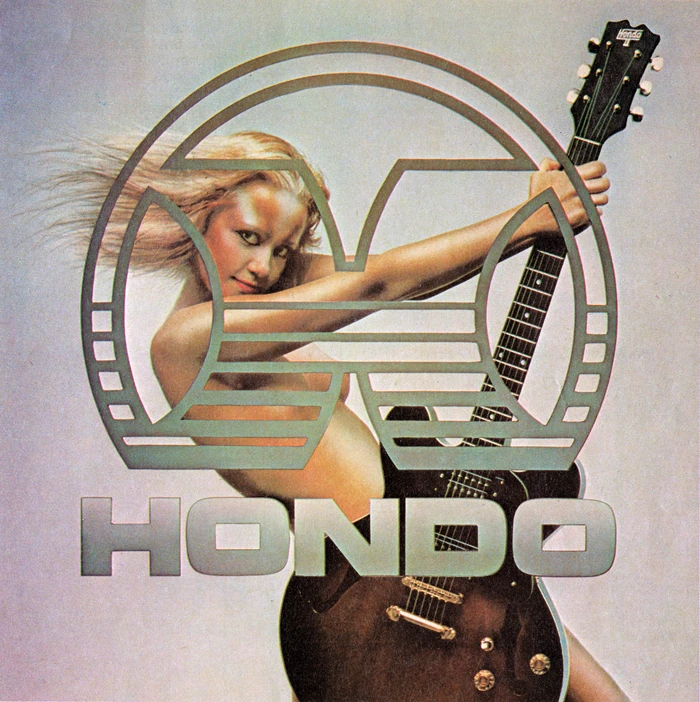
Hondo? Gross.
Hohner? Isn’t that harmonicas?
Korean-made? Must be junk.
Japanese copy? Either treasure chest or trash heap depending on which YouTube guy got to them first.
HEAR ME OUT
Some of those guitars have incredible bones.
Not all of them. I’m not here to tell you every weird old import hanging in a pawn shop is the second coming. Some are dogs. Some are cool but overpriced. Some need enough work that your “deal” becomes a financial cry for help.
But some of them?
Some of them are absolute killers.
That’s what a sleeper guitar is to me. A guitar with more real value than the market gives it credit for. A guitar that works harder than its reputation. A guitar that doesn’t need a fan club to be good.
And honestly I love that.

QUICK ANSWER
If you just want the short list, these are some of the sleeper electric guitar families I would absolutely keep an eye on:
- Westone Spectrum ST and DX
- Vantage Avenger models
- Squier Pro Tone Stratocasters
- Korean-made Epiphone Sheraton II models
- Hohner TE Custom guitars
- Charvette 270 models
- Electra MPC guitars
- Fresher Les Paul-style copies
- Hondo II MIJ Strat-style guitars
- Heerby Les Paul-style guitars
- Ibanez Artist AR series guitars
- Aria Pro II PE series guitars

Those are not the only good choices. They are just some of the clearest examples of what a sleeper guitar is supposed to be: better in the hand than it looks on paper.
WHAT EVEN IS A SLEEPER GUITAR?
A sleeper guitar is a guitar that performs above what its brand, reputation, or resale value would suggest.
That’s it.
Not “old and weird.”
Not “lawsuit era.”
Not “some guy on a forum said it’s basically a Burst.”
A real sleeper has to offer actual value.
Usually that means at least one of these is true:
The neck is excellent.
The fretwork is better than expected.
The body and hardware are solid.
The pickups are usable or easy to upgrade.
The guitar makes a genuinely good platform for setup and refinement.
I care a lot more about that than I do about mythology.
THE “LAWSUIT ERA” THING
The term “lawsuit era” gets thrown around like candy at a parade.
Most people use it to describe older Japanese copy guitars from the 1970s and early 1980s, especially the ones that borrowed heavily from Gibson or Fender shapes. But at this point people use the phrase so loosely it has started to mean “old copy guitar I want you to think is special.”
Sometimes those guitars are special.
Sometimes they are not.
Sometimes they are just old.
The better question is not:
“Is this lawsuit era?”
The better question is:
“Was it built well, and is it still underpriced for what it is?”
That question will save you a lot of money and a lot of dumb optimism.
WHY GOOD OLDER GUITARS GET OVERLOOKED
Most sleeper guitars stay undervalued for a few really boring reasons.
The first is brand penalty. People see Squier, Hondo, Hohner, Westone, or some other non-holy name and mentally deduct 40 IQ points from the instrument.
The second is country-of-origin snobbery. For years Japanese and Korean guitars got treated like the cheap seats, even when some of those factories were putting out genuinely impressive work.
This was such a lame politics thing. Japanese and Korean people are some of the most disciplined individuals. They consistently produce high-quality work every single day. That was threatening to our sensitive inconsistent American egos.
The third is collector tunnel vision. Once the market decides which brands are “correct,” everything else gets treated like a consolation prize.
And the fourth is confusion. Weird serial numbers. Unclear factory history. Swapped pickups. Blurry marketplace photos taken with a potato. All of that keeps prices soft.
For the real ones, that confusion can be a gift.
THE BEST SLEEPER ELECTRIC GUITARS BY TYPE
Best Les Paul-style sleeper guitars
Fresher Les Paul-style models

Fresher is one of those names that makes gear nerds perk up and normal people keep scrolling.
Which is great. Please keep scrolling. I would like prices to remain sane.
A good Fresher Les Paul-style guitar can deliver a lot of the feel people chase in Japanese-built single-cuts without dragging along the full Tokai, Greco, or Burny tax. They are not all equal, but the better ones absolutely have the kind of construction that makes them worth setting up and hanging onto.
This is a very good lane for someone who wants old-school single-cut energy without paying mostly for a story.
Heerby Les Paul-style models
Heerby is a tremendous sleeper-guitar name because it sounds fake enough to scare off casual buyers.
That’s usually a good sign.

Some Heerby guitars have the kind of set-neck construction and feel that can punch way above the badge. The downside is that this is not a category to buy blind. This is not “two blurry photos and a dream” territory. You need to know what you’re looking at.
But when they are right, they are very right.
Electra single-cut and MPC models
Electra is one of the more interesting brands in this whole conversation because it sits right on the edge between copy-era history and full-on weirdness.
I mean that as a compliment.
The MPC models get attention because of the onboard effects modules, which is admittedly cool in a “your uncle’s sci-fi basement rig” kind of way. But even outside the novelty, a lot of these guitars have real build appeal.
The main caution here is electronics. A guitar can look like a bargain and then become a wiring exorcism real quick if the switching is hacked up or key parts are missing.
Still, a clean Electra can be one of the coolest buys in this whole category.
PJ and the Beard talk about Electra
Best Strat-style sleeper guitars
Squier Pro Tone Stratocasters
This is one of the clearest examples of a guitar suffering for the sins of its own logo.
Some people hear “Squier” and black out.
That’s their problem.
The Pro Tone line earned its reputation for a reason. These guitars can feel a whole lot closer to real-deal Fender territory than the branding suggests, and they remain one of the smartest buys for players who want a vintage-style Strat platform without paying Fender prices.
If somebody asked me for a sleeper Strat that could be set up to play beautifully, this would be near the top of my list.

Hondo II MIJ Strat-style models
Hondo is a perfect example of why headstock bias is such a goofy thing.
Yes, the brand produced some lower-tier instruments. Also yes, that causes people to dismiss the entire catalog like they’re doing theology instead of buying a guitar.
But some Japanese-made Hondo II Strat-style guitars are much better than the name suggests. These are not guitars I would buy because “Hondo rules.” These are guitars I would judge one by one.
If the neck is right, the fretwork is workable, and the structure is clean, a good MIJ Hondo can be a very respectable guitar.

Westone Spectrum ST and DX
Westone is one of my favorite sleeper names because a lot of players still do not realize how good some of these can be.
The Spectrum line hits a beautiful sweet spot: practical design, strong playability, and none of the collector froth that usually ruins a good deal. These are player guitars. Not museum guitars. Not internet flex guitars. Guitars guitars.
That’s a category I trust.
Find one with a healthy neck and decent original hardware and you may end up wondering why everybody else is still arguing about logos.
To me it’s a borderline 80’s hair metal guitar but not completely coked out.

Best superstrat sleeper guitars
Vantage Avenger models
Vantage guitars often have the kind of good bones that make repair people smile.
Strong necks. Sensible layouts. Enough quality in the construction that a setup and thoughtful upgrades can turn them into monsters.
They are not fashionable, which is honestly part of the appeal. If you want an older hot-rodded guitar without getting dragged into nostalgia pricing, Vantage is a very smart place to look.

Charvette 270 models
The hair metal saga continues.
Charvette is easy to ignore because it was positioned as a lower-tier line and the name carries approximately zero status.
But status is not tone.
Status is not fretwork.
Status is not neck stability.
Some Charvette 270s give you exactly what a sleeper buyer should want: useful specs, straightforward playability, and enough quality to justify your attention. A good one is not trying to impress collectors. It is trying to work.
And I like tools that work.

Westone Pantera models
The Pantera family deserves more love than it gets.
These are practical, player-focused guitars that still tend to live under the shadow of more famous superstrat names. Which means you can often get a very usable platform for reasonable money.
Again, the value proposition is what matters here. Not “Will strangers on the internet validate my purchase?” but “Can this guitar be dialed in to absolutely rip?”
If yes, I’m interested.

Best semi-hollow sleeper guitars (Sasquatch’s favorite guitar style)
Korean-made Epiphone Sheraton II
There are certain Korean-made Sheraton IIs that players quietly swear by, and I get it.
This is one of those guitars that gets underestimated because people default to “well it’s not a Gibson.” Cool. And a Toyota is not a Ferrari. Still starts every morning.
If your actual goal is to get a handsome, playable, musically useful semi-hollow, a good Sheraton II can be a fantastic buy. And they often respond really well to thoughtful setup and electronics work.
A lot of the stigma sits in the name, not the instrument.

Hondo Deluxe ES-style models
Semi-hollows from less glamorous brands can be especially good sleeper territory because most buyers shop them with a very short approved list in their head.
That leaves some genuinely decent off-brand examples just sitting there.
I’m not saying every Hondo Deluxe ES-style guitar is secretly amazing. I am saying that if the neck is healthy, the frets are decent, and the harness isn’t a horror movie, you may have something very worthwhile.

Best Tele-style sleeper guitars
Hohner TE Custom
The Hohner TE Custom is one of those guitars that people would probably adore more if it had a different name on the headstock.
Some versions are genuinely excellent workhorse instruments. No boutique fairy dust. No mythology. No “crafted in moonlight by monks.” Just useful guitars with stronger bones than people expect.
That’s very much my kind of guitar.
If somebody wants a Tele-style sleeper and is willing to judge the instrument instead of the logo, this is a very smart place to look.

Best oddball, art-rock, and “I know something you don’t know” sleepers
Ibanez Artist AR series
The Ibanez Artist line is not a total secret, but I still think it stays undervalued relative to how good many of these guitars are.
Some players skip them because they want something more vintage-correct. That’s fine. More for the rest of us.
The Artist series can be incredibly satisfying for players who want a versatile, roadworthy, well-built guitar with a little personality.

Aria Pro II PE series
The PE series has had a strong reputation among people who have actually spent time with them, but they still tend to sit below the mainstream prestige ceiling.
That creates room.
These are serious guitars. Not every example is cheap. Not every one is a bargain. But they absolutely belong in the conversation about underrated electric guitars that can outperform expectations.
I mean look at those fingerboard inlays. Clouds? Come on.

WHAT TO CHECK BEFORE YOU BUY
This part matters more than the logo. More than the year. More than whatever dramatic phrase the seller wrote in all caps.
Start here:
Is the neck healthy?
Does the truss rod work?
How bad is the fretwear really?
Is the body structurally sound?
Are the electronics clean or hacked?
Are the original parts important here, or is this just a player?
Will the total cost still make sense after repairs and setup?
That last question is the killer.
A cheap guitar can still be a bad deal.
WHEN AN UNDERRATED GUITAR IS WORTH UPGRADING
I love upgrading guitars when the platform deserves it.
A sleeper is worth upgrading when the neck feels great, the body is solid, and the instrument already has something alive in it acoustically. If it resonates well unplugged and feels right in the hands, pickups, electronics, nut work, fret dressing, and setup can take it a very long way.
This is where older Japanese and Korean guitars get dangerous.
You tell yourself it’s just a cool cheap find.
Then you clean it up.
Then you fix a few weak links.
Then suddenly you’re reaching for it more than the expensive guitar.
That is the whole game.
WHEN TO WALK AWAY
Sometimes the most honest luthier advice is just:
Leave it there.
I would be cautious if:
the neck is twisted
the truss rod does not function
the frets are gone and the guitar is not special enough to justify a refret
the body has major cracks or unstable repairs
the electronics are heavily hacked and key parts are missing
the seller is hiding important photos
the “deal” only works if everything turns out perfect
Cheap guitars are only fun when the repair bill doesn’t swallow the joke.
QUICK PICKS
If I had to narrow this down to the sleepers I’d most confidently tell somebody to watch for, I’d start here:
For Strat-style players: Hondo II MIJ
For Tele-style players: Hohner TE Custom
For superstrat players: Vantage Avenger
For semi-hollow players: Korean-made Epiphone Sheraton II
For single-cut players: Fresher or Heerby
For players who want something a little left of center: Aria Pro II PE models
Again, those are not the only good choices. They just show the idea most clearly.
A sleeper guitar should have more real-world value than the market gives it credit for.
FAQ: SLEEPER ELECTRIC GUITARS
What is a sleeper electric guitar?
A sleeper electric guitar is a guitar that offers better performance, build quality, or upgrade potential than its branding or market reputation suggests.
Are lawsuit-era guitars actually good?
Some are. Some are overhyped. The term itself does not guarantee quality. You still have to judge construction, condition, and playability.
What are the best sleeper electric guitars under the radar?
Some of the most commonly overlooked options include Westone, Vantage, Squier Pro Tone, Hohner TE Custom, Korean-made Epiphone Sheraton II, Electra, and certain older MIJ copy guitars.
Are old Japanese guitars worth buying?
A lot of them are, especially when the neck, fretwork, and overall build quality are strong. But “old Japanese guitar” is way too broad a category to treat like automatic magic.
Are Korean-made guitars worth buying?
Absolutely. A lot of Korean-made guitars were dismissed for years because of branding or old assumptions, but some are excellent instruments and great upgrade platforms.
How do I know if an older cheap guitar is worth upgrading?
It is usually worth upgrading if the neck feels excellent, the body is solid, the truss rod works, and the guitar already sounds good unplugged.
What should I check before buying a sleeper guitar?
Start with neck health, truss rod function, fret condition, structural integrity, wiring quality, and whether the total cost still makes sense after setup and repairs.
Last Thing
The best sleeper electric guitars are not always the rarest, the weirdest, or the most hyped thing in a forum thread started by a guy named ToneWizard.42069 (which may or may not be my reddit user name.)
They are the guitars with substance and quality.
That’s why I love them. Someone put care in when they made them.
As a luthier, I care a lot more about whether a guitar has good bones than whether it gives somebody a rush of nostalgia or social approval.
A well-built, underappreciated guitar with a proper setup can absolutely become a better playing instrument than something newer and shinier that cost a whole lot more.
*cough*
PRS, Gretch, Gibson, or Fender or Duesenberg (yeah, fight me)
*cough*
It ain’t about hype.
It’s knowing what you’re looking at and doing what’s best for you.
And once you learn that, sleeper guitars become one of the best places in the market to find real value and something that has stability given it’s age.
Buy old and restore the spirit of music preservation. Don’t fall into the trap but if you do, buy a custom guitar from me.
Haha.
FOR THE NERDS:
Collector / reference hubs
https://matsumoku.org/serial-no-dating-info/
https://westoneguitars.net/scans-1/catalogues-price-lists/
https://www.westone.info/indexspectrum.html
https://www.rivercityamps.com/electra/
https://www.electraguitar.com/pages/history
https://www.tokairegistry.com/tokai-info/tokai-gibson-models.html
https://ibanez-vintage.net/resources/ibanez-serial-tracker/
Representative YouTube demos (starting points)
https://www.youtube.com/watch?v=jQyopm3iZfI (Electra MPC demo)
https://www.youtube.com/watch?v=-goIakunoPA (Aria Pro II PE-1500 demo)
https://www.youtube.com/watch?v=N6ZoLUfQ87M (Squier Pro Tone Strat demo)
https://www.youtube.com/watch?v=HhIMw99BINE (Korean Epiphone Sheraton II demo)
https://www.youtube.com/watch?v=Wdc3OKFavY4 (Charvette 270 demo)
https://www.youtube.com/watch?v=Hz6ScXEtexQ (Hohner TE Custom demo)
https://www.youtube.com/watch?v=YjD8LleKpGE (Sears/Teisco-era MIJ “copy” demo)